 InLoop Foam
Filament extrusion lines
Coiling physics for lines that make 3D filament mats
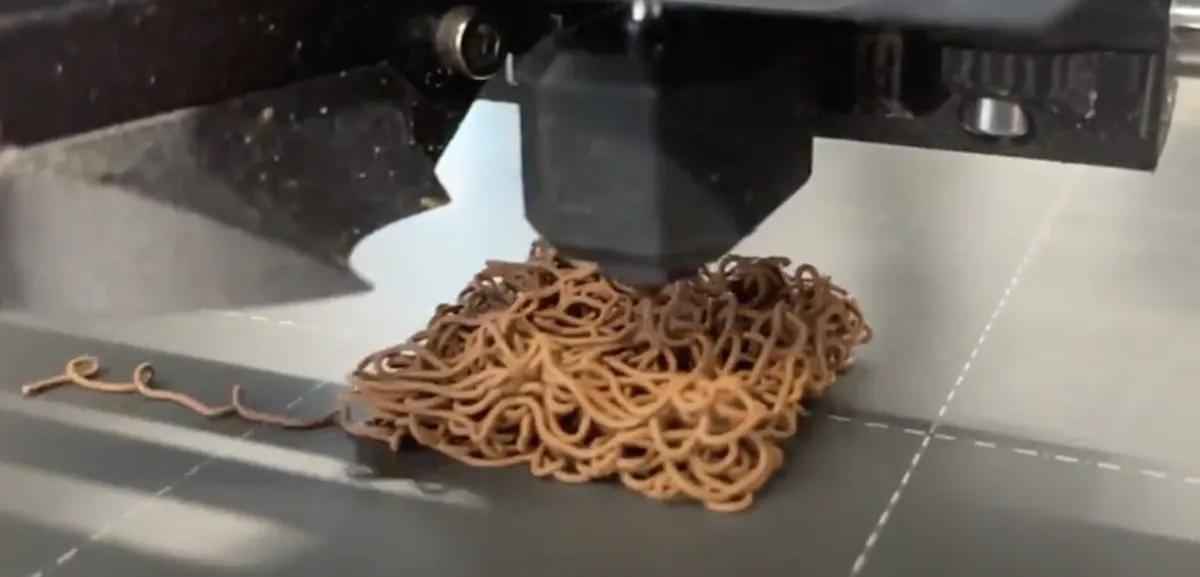
Entrance mats, cushion cores, erosion control mats and drainage cores are made by dropping molten filaments onto a moving belt, where they loop and fuse. That looping is the same instability we control in viscous thread printing. We bring the measurements and models to set it on purpose.
What we heard
Line operators want better physical data
In customer discovery interviews through the NSF I-Corps program, people who run filament extrusion lines told us the same thing: they want better physical data on how line settings turn into mat structure.
The physics of a falling viscous thread is well studied. A thread that lands on a surface moving slower than it falls buckles and coils, and the coil size and frequency follow from fall height, flow rate and viscosity. Our team has spent years measuring and controlling that behavior to print foam. The same knowledge applies to a die with hundreds of holes.
Our graded samples
Loops placed on purpose
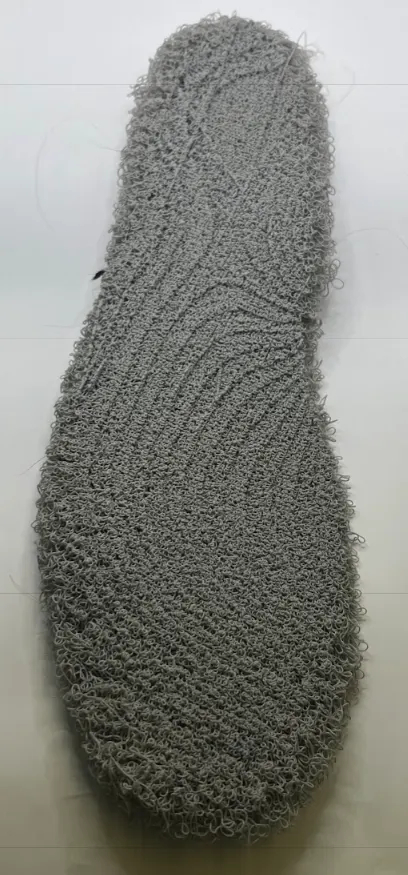
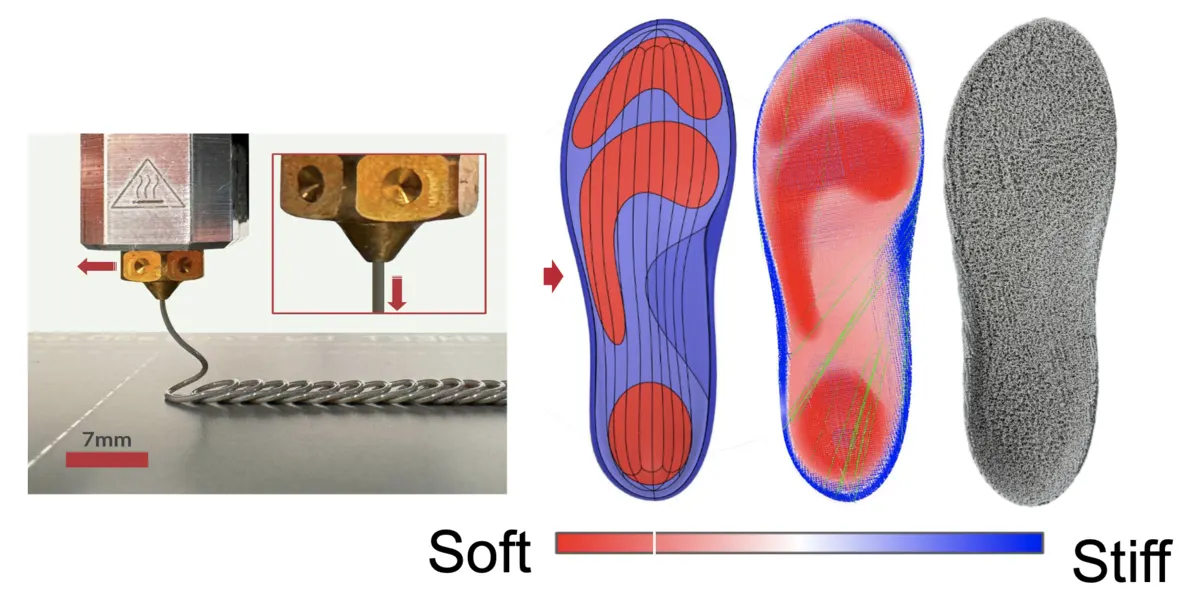
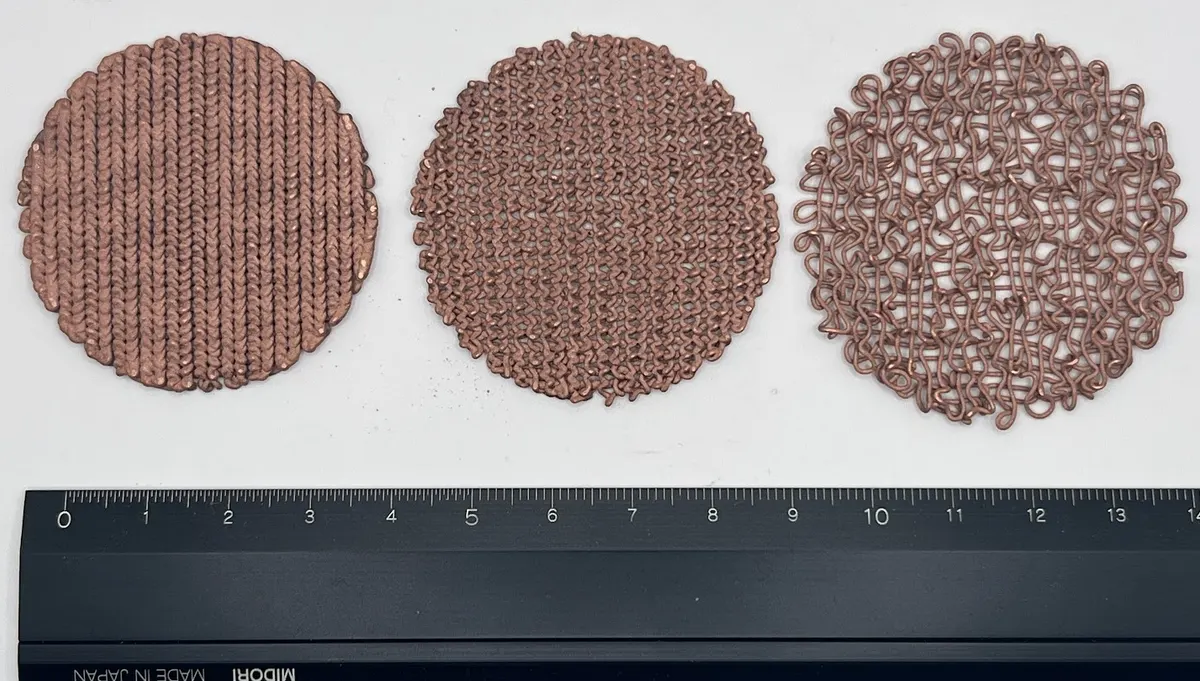
Printed by viscous thread printing. Each part changes loop size or density from zone to zone, the kind of control a mat line could gain by varying settings across the die or over time.
Products made this way
3D looped-filament nonwovens in the market
| Product | Maker | Structure | Use |
|---|---|---|---|
| Nomad scraper matting | 3M | Open web of vinyl loops | Entrance matting |
| Breathair | Toyobo | Random loops of thermoplastic elastomer filament, bonded where they touch | Seat and mattress cushioning |
| Enkamat | Enka Solutions | Nylon monofilaments fused where they cross | Erosion control and turf reinforcement |
| Enkadrain | Freudenberg | Fused, entangled polypropylene or polyamide filaments | Drainage and vibration-damping cores |
The physics
What each line setting really changes
Coiling has distinct regimes, set by how viscosity, gravity and inertia balance as the filament falls. Small changes near a regime boundary can change the mat a lot; far from one, they barely matter.
- Die-to-belt height
- Which coiling regime the filament is in, and so the loop size
- Throughput per hole
- Filament diameter and how fast it coils
- Belt speed
- Loop pattern, from tight coils to stretched meanders, and mass per area
- Melt temperature
- Viscosity, which shifts loop size and how well loops fuse
- Hole pitch and layout
- How much neighboring filaments overlap, which sets density and bonding
- Quench conditions
- How long loops stay soft enough to fuse before the structure freezes
How we help
Data, models and new mat designs
Coiling maps for your resin
Loop size, coiling frequency and laydown pattern measured across the heights, throughputs and belt speeds your line can reach, so you can see where each regime starts and ends.
Settings-to-structure models
Models that link line settings to loop size, mass per area and mat thickness, built on published coiling physics and checked against your data.
Zoned and graded mats
Ways to change firmness or density across the width or along the length of one mat, drawn from our experience grading foam with a printing toolpath.
Troubleshooting
Help with density variation across the width, unstable loop patterns, startup scrap and product changeovers, starting from the physics instead of trial and error.
Extrusion FAQ
Questions from line operators
Do you sell extrusion equipment?
No. We supply measurements, models and process development. We are happy to work alongside your line builder.
Can you work with our resin and keep our process confidential?
Yes. Send a resin sample and the range of line settings you use, and we will sign an NDA before you share process details.
How is this related to your foam printing?
Viscous thread printing controls the same coiling instability, one filament at a time, under a printing toolpath. Years of measuring how height, flow and speed set loop size and density in printed foam carry over directly to multi-filament extrusion lines.
Tell us about your line
Share the product, resin and range of line settings you run, and what you would change if you could predict it. We will reply within two business days.
Prefer email? miske@foaminloops.com or brett@foaminloops.com