 InLoop Foam
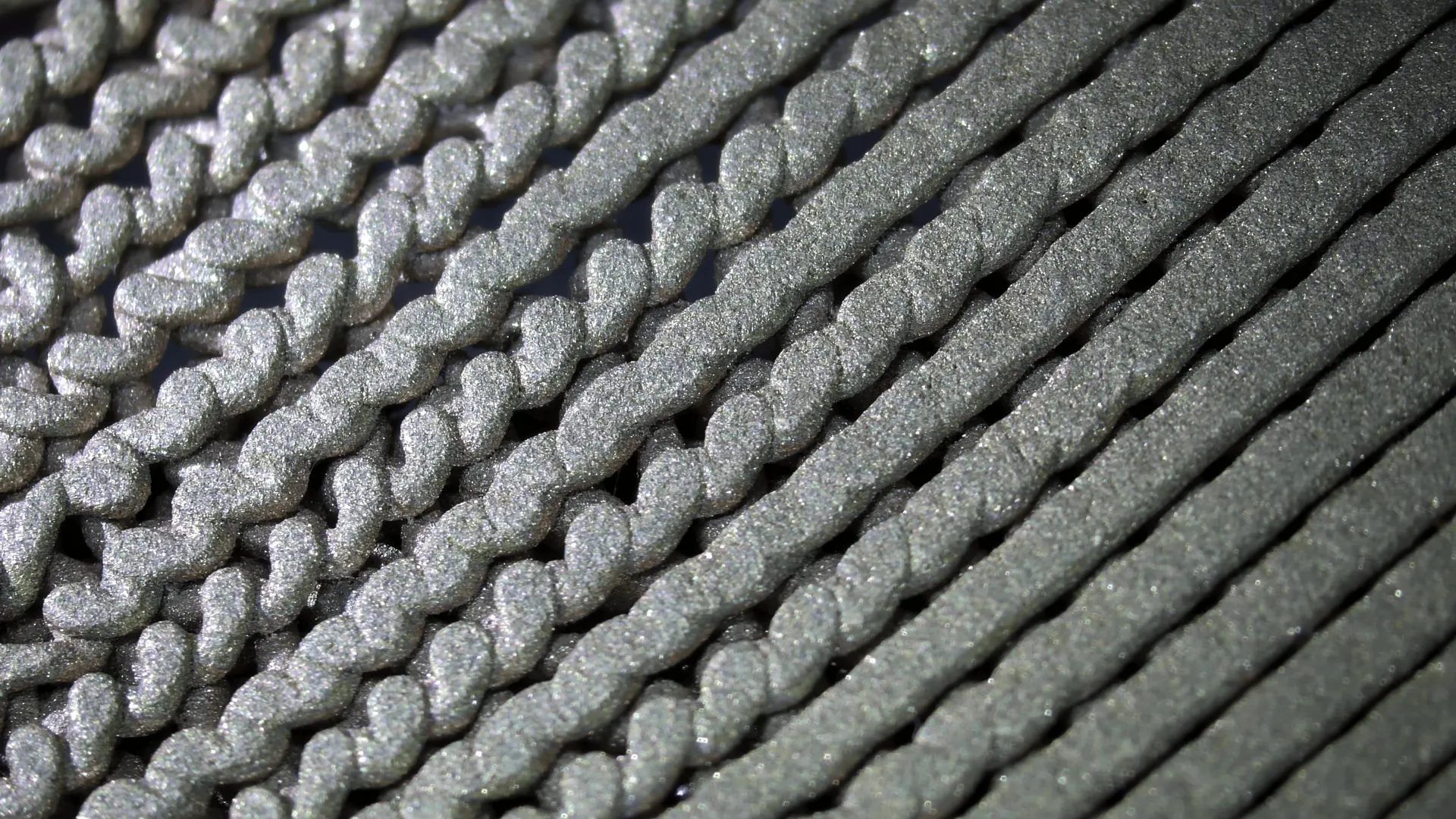
Viscous thread printing
Engineered foam, printed to your specification
Made to your
Custom metal foam in copper, bronze and 316L stainless, plus polymer, glass and ceramic foams, with porosity you specify rather than inherit. Printed foam prototypes in under three weeks for heat exchangers, impact absorbers and medical devices.
- Materials
- Cu, CuSn, 316L, polymers, glass, alumina
- Relative density
- 20–90%
- Min. feature
- 0.2 mm
- Prototype lead time
- <3 weeks
- Northeastern UniversityBuilt on VTP research from the Transformative Robotics Lab
- Advanced ScienceViscous thread printing research featured on the journal cover (Vol. 11, Issue 44, 2024)
- Patented processCore VTP method patented; new process steps patent pending
- Blueprint by The EngineTop 3 team, Spring 2026 cohort of The Engine's Tough Tech program
VTP research and commercialization supported by
The problem
Foam you can engineer
Conventional metal foam is made by foaming a melt or replicating a polymer template. Porosity comes out as a distribution you accept, geometry is limited to blocks and sheets, and a change to either means new tooling.
Viscous thread printing writes the lattice directly. Pore size, strut thickness and density gradient are toolpath parameters, so a design change is a file change. That moves a foam iteration from months to weeks and puts graded structures inside a single part.
Core process patented; new process steps patent pending. We work under NDA and provide build data with every part.
Process
Viscous thread printing, from toolpath to foam part
- 01
Print
A viscous composite thread is extruded along a continuous path and coils into an open-cell lattice. Pore size and strut thickness are set in the toolpath, not by a chemical blowing agent, so the structure repeats part to part.
- 02
Debind and sinter
For metal and ceramic foams, binder is removed and the green part is sintered to a full metallurgical bond. Shrinkage is characterized per material, so net-shape tolerances hold without secondary machining.
- 03
Finish and verify
Parts are cut, brazed or joined to your interface. We report density, pore distribution and compressive response for every build.
Materials
Metal, polymer, glass and ceramic foam
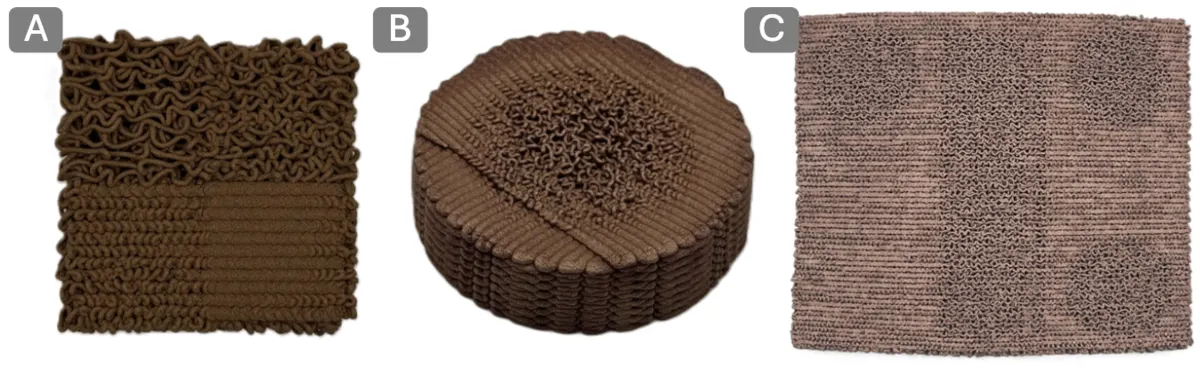
Custom metal foam
Open-cell copper, bronze and stainless steel foam with the pore size, density and outer shape you specify. Printed, debound and sintered to a full metallurgical bond.
Specs and grades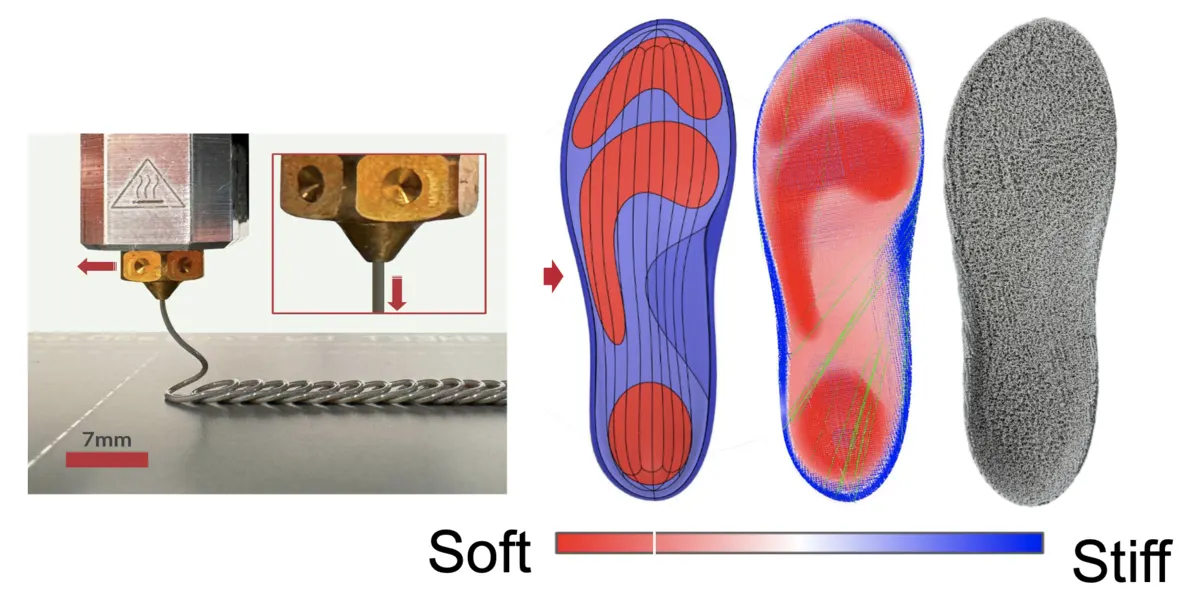
Polymer foam
Elastomeric and rigid polymer foams where stiffness changes across the part: soft where it touches, stiff where it carries load.
Specs and grades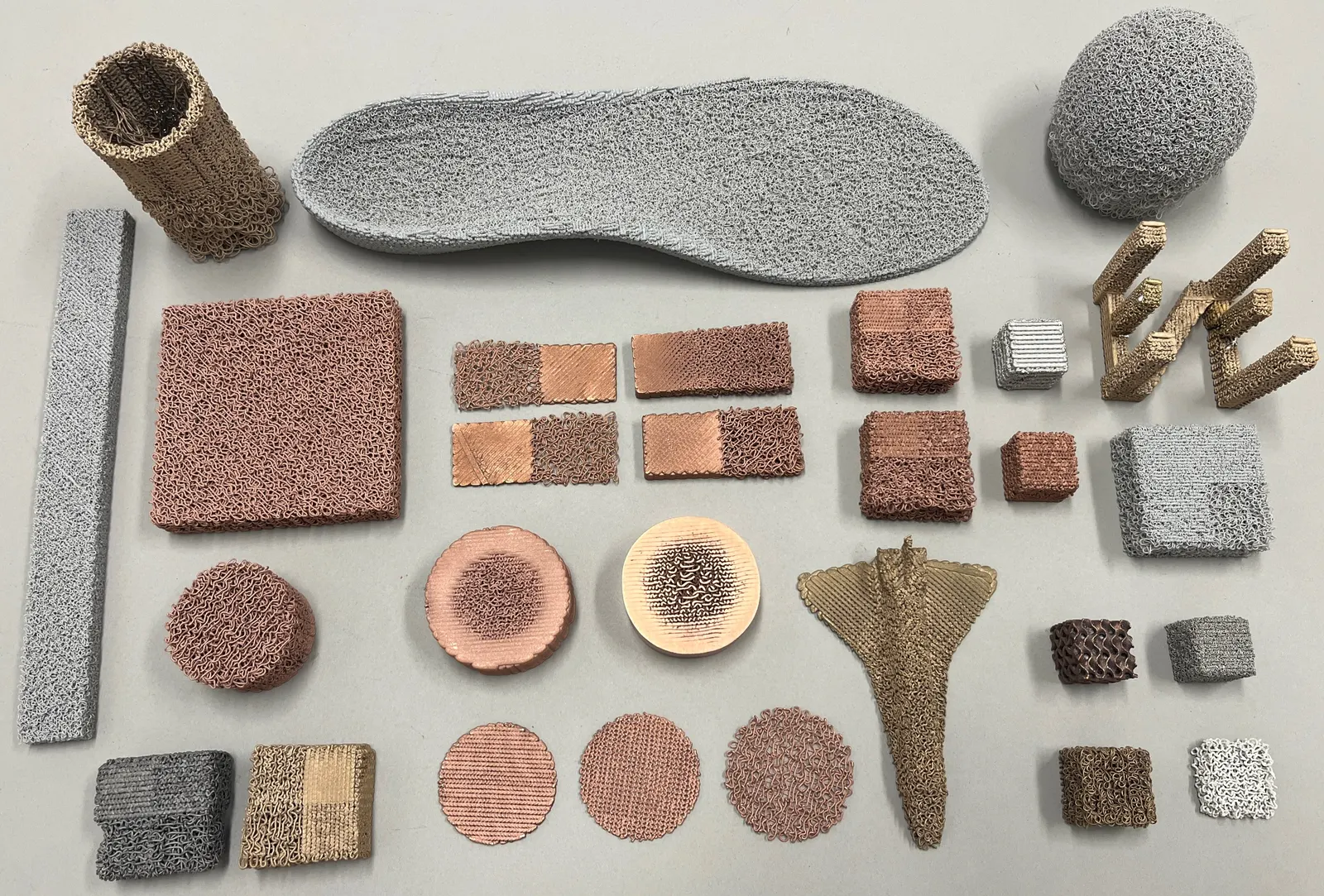
Ceramic and glass foam
Sintered alumina and borosilicate glass foams for high-temperature, chemically inert and filtration parts. Developed with customers case by case.
Specs and gradesCapability envelope
Custom metal foam, by the numbers
| Property | Range | Notes |
|---|---|---|
| Base metals | Copper, bronze (CuSn), 316L stainless | Others on request |
| Relative density | 20 – 90 % | Gradients within one part |
| Pore size | 0.4 – 5 mm | Set in toolpath |
| Build envelope | 200 × 200 × 150 mm | Larger via joining |
| Wall / strut thickness | 0.2 mm min. | Material dependent |
| Quantities | 1 – 500 parts | Prototype to pilot |
Parts and structures
Printed foam prototypes and parts
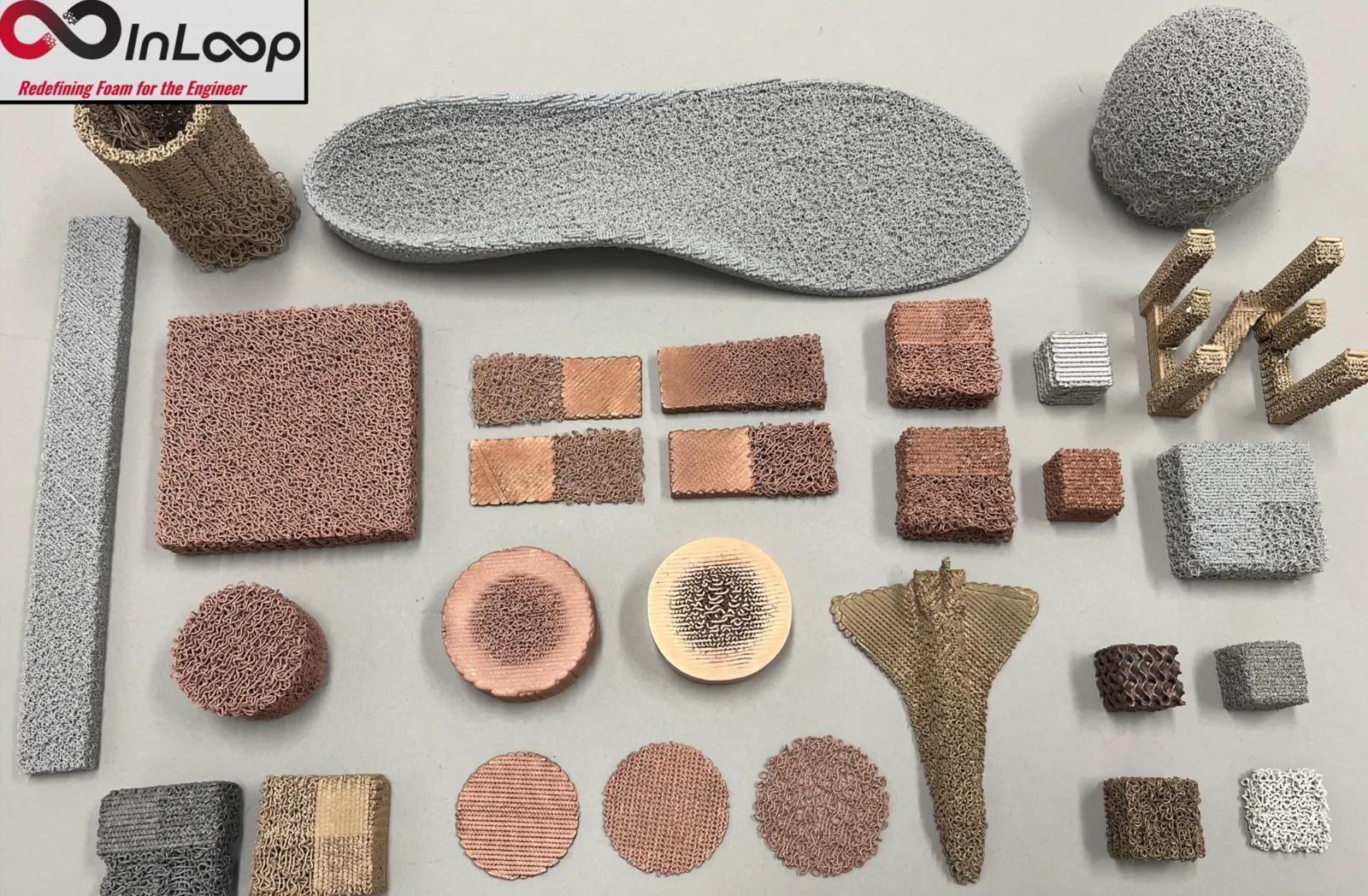
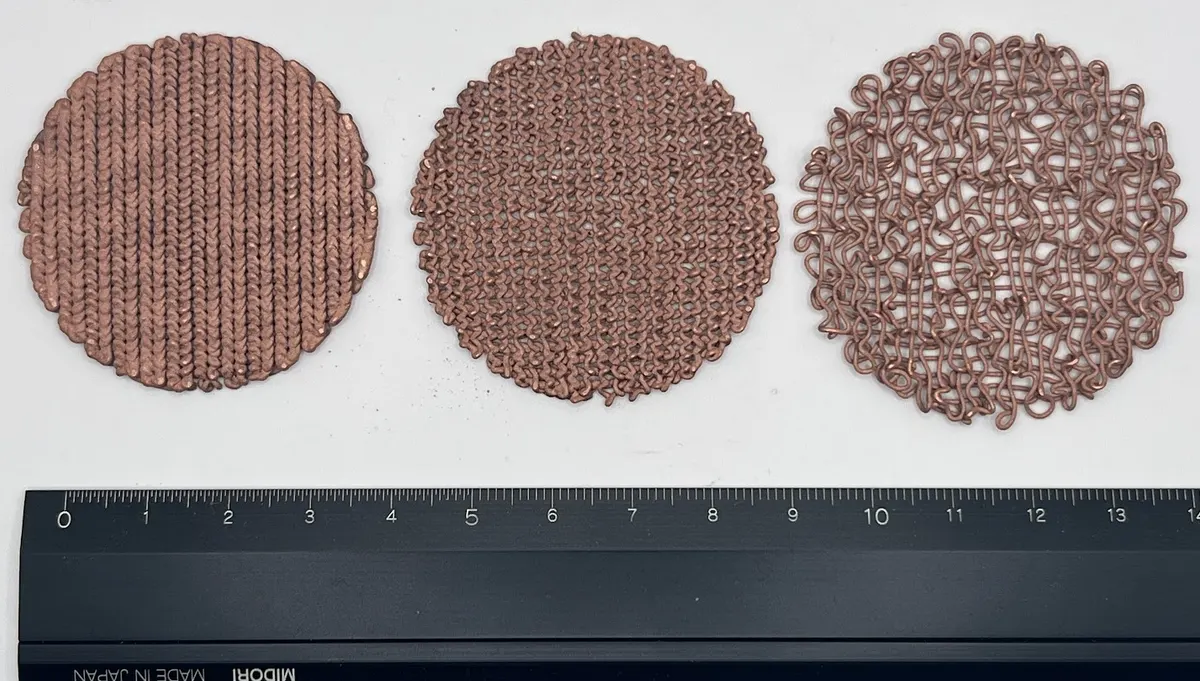
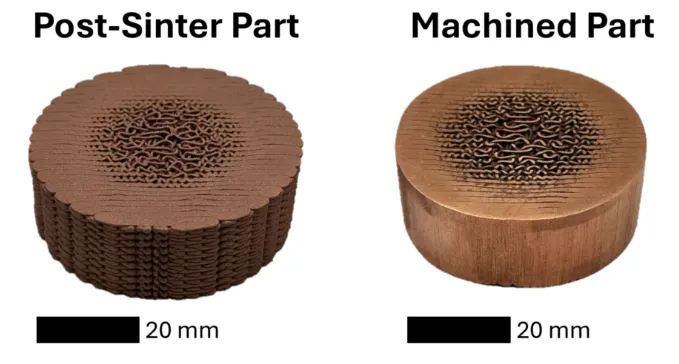
Test data
Characterized in our lab, not just printed
Every structure we offer has been through compression, shear, flexural and tensile testing. Prototype builds ship with measured density and compressive response.
Where it goes
From heat exchangers to porous stainless structures

Brett Emery
CEO & Cofounder
Northeastern University PhD in additive manufacturing of programmable materials and viscous thread printing.

Jacob Miske
CTO & Cofounder
Engineer working on additive manufacturing and parallel robotic mechanisms.
FAQ
Frequently asked questions
What is viscous thread printing?
Viscous thread printing (VTP) is an additive manufacturing process that extrudes a viscous thread which coils as it lands, building an open-cell foam lattice. Pore size, strut thickness and density gradients are set by the toolpath, so foam properties are designed rather than inherited from a chemical foaming process.
Which materials can you print as foam?
Copper, bronze (CuSn), 316L and 17-4 PH stainless steel, TPU, PEBA, polyurethane, PLA composites, alumina and borosilicate glass. Other materials can be developed on request.
What density and pore size range can you hit?
Relative density from 20 to 90 percent and pore sizes from 0.4 to 5 mm, with gradients inside a single part. Minimum strut thickness is about 0.2 mm, depending on material.
How fast can I get printed foam prototypes?
Most printed foam prototypes ship in under 3 weeks. Budgetary quotes from an STL are instant on our quote page, and engineering-reviewed quotes go out within two business days.
What quantities do you make?
From single prototypes to pilot runs of about 500 parts. Contact us for production volumes.
Which file formats do you accept?
Upload an STL for an instant estimate. STEP files are accepted for engineering review, or you can describe the problem and target properties and we will propose a structure.
Do you work under NDA?
Yes. We regularly work under NDA and include build data with every part.
Send us a part to quote
Upload an STL for an instant budgetary estimate, or describe the problem and target properties and we will propose a structure. Reviewed quotes go out within two business days.
Prefer email? miske@foaminloops.com or brett@foaminloops.com